This article conducts a systematic comparison and analysis of key construction points based on observations of German data center images and domestic data center standards. The article focuses on aspects such as power supply, cooling, layout and wiring, and safety management. It aims to provide reference technical points and compliance recommendations for engineering design, construction management, and acceptance, helping to improve the reliability and maintainability of server rooms.
As can be seen from the images of German data centers, emphasis is placed on redundancy and modular design. Data centers typically feature separate hot/cold aisles, standardized cabinets, and visual wiring labeling. Spatial planning focuses on corridor width and maintaining accessibility. Power distribution and cooling equipment are typically arranged in a centralized manner to facilitate inspections and fault isolation. This type of design helps improve high availability and operational efficiency.
The construction of domestic data centers must meet national and industry standards regarding power supply, fire protection, seismic resistance, and environmental control. The specifications emphasize the level of power supply redundancy, the coordination between UPS and generators, fire compartments and automatic fire suppression systems, temperature and humidity control ranges, as well as grounding and lightning protection measures. Following standards helps to pass inspections and ensure long-term stable operation.
In terms of power supply, the pictures of German server rooms show clear dual or multiple power distribution circuits along with distinct circuit markings. The layout of the power distribution cabinets facilitates switching and maintenance. The key points for domestic construction focus on meeting PUE requirements, power redundancy (A/B power supply), as well as fire and short-circuit protection designs for busbars and distribution boxes. During construction, attention must be paid to load forecasting and grounding reliability.
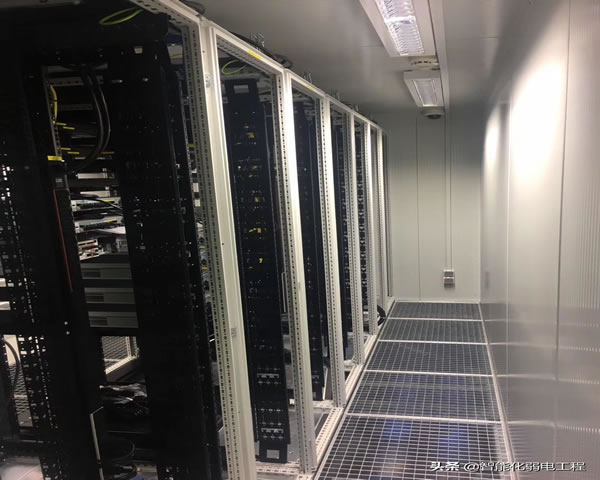
German server room Precision air conditioning and cold aisle containment are typically used, with an emphasis on energy efficiency and visual temperature monitoring ; Domestic data centers have tended to adopt similar designs in recent years, but during construction, strict implementation of cold aisle sealing, air duct design, and condensation handling is required. When accepting a refrigeration system, attention should be paid to flow regulation, redundant configuration, and energy-saving control logic.
The pictures of the German network room show standardized cabinet numbering, as well as organized vertical/horizontal cable trays and cable management. Domestic construction must strictly adhere to wiring pathways, cable classification, fire protection for wall penetrations, and label management to avoid cross-interference and heat dissipation issues. After wiring installation, thermal imaging and impedance testing are required for verification.
In comparison, German data centers pay more attention to maintainability and long-term operation costs in terms of construction details, such as providing inspection passages, modular equipment insertion spaces, and centralized monitoring consoles. Domestic data centers need to strengthen quality control during construction, inspect the suitability of materials, and keep records of construction processes, to ensure smooth operation after acceptance.
During the construction phase, design briefings, itemized inspections, and third-party testing should be adhered to. Special attention should be paid to checking the power distribution circuits, the coordination between UPS and generators, the load on air conditioning systems and the sealing of cooling channels, as well as the logical operation of fire alarm and extinguishing systems. It is recommended to focus on functional testing for acceptance, while also documenting maintenance manuals and training operational staff to reduce risks during the initial operation phase.
By comparing images of German data centers with domestic standards, it is evident that modular design, redundant configurations, and standardized cabling are key to improving reliability. It is recommended to clarify operational requirements at the early stages of the project, strictly adhere to standards, and refer to international best practices to optimize design details and construction management, thereby delivering a stable, maintainable, and efficient server room.
- Latest articles
- User Testing Of Alibaba Cloud 24 RMB Server In Malaysia Latency And Bandwidth Performance Report
- The Technical Operations Manual Covers The Server Troubleshooting Process For Website AV In The United States
- Case Study: Growth And Risk Management Of Korean IP Native To Overseas Business
- Which Malaysian Server Is Best For E-commerce Platforms? Recommendations For Scalability And Stability
- In-depth Analysis Of Cambodia CN2 Bandwidth Price Trends And Operation And Maintenance Cost Comparisons
- Low-cost And Low-bandwidth Optimization Of Thai Cloud Servers In Low-traffic Scenarios
- Essential Reading For Operations Teams To Sample Tencent Cloud Singapore Server Fault Troubleshooting Checklists
- Vietnam's Native IP VPS And Cloud Server Hybrid Deployment Strategy For Collaborative Optimization
- How To Choose The Right Data Center Location To Leverage The Advantages Of Vietnam's CN2 Servers
- Market Price Analysis: How Much Does It Cost To Rent A VPS In Korea? Price Ranges For Different Configurations And Bandwidths
- Popular tags
-

Explore The Application Effect Of German Monitoring Servers In The Industry
explore the application effects of german surveillance servers in various industries and understand their importance in data security and surveillance technology. -

Why More And More Companies Choose German Server Hosting
more and more companies choose german server hosting. this article analyzes the reasons and advantages behind it to help companies make wise decisions. -

Analyze Technical Support Services For German Server Hosting
this article analyzes the technical support services of german server hosting, covering service types, technical advantages and selection suggestions to help you make wise decisions.